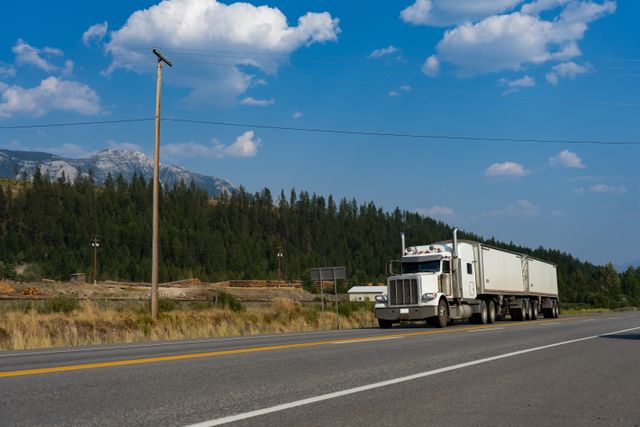
In the 2024-25 year, road freight was transported 253 billion tonne kilometres in Australia, according to the Bureau of Infrastructure and Transport Research Economics. New South Wales established a record of 87.6 billion tonne-kilometres. Within these enormous numbers, individual pallets move across state borders on a daily basis. The probability that a pallet will be delivered intact, within the specified deadline and according to the price quote, depends on decisions made long before the vehicle gets out of the yard.
The Real Route Of A Pallet
In pallet delivery between states, it is very rare that a pallet travels directly from consignor to consignee. It is picked up from the consignor’s premises by a local truck and then taken to a depot for sorting and loading onto the vehicle responsible for carrying the freight to its destination. There may be one or several other depots along the way until the freight reaches the point of final delivery. Every transfer point gives rise to possibilities of damage and delays, and the fewer the transfers, the lower the risk. It is worthwhile to find out from the carrier how many times a pallet will change hands and at what depots.
Starting With The Right Pallet
The importance of a pallet should not be underestimated. The Australian standard pallet has dimensions of 1165 x 1165 millimetres; that makes it suitable for most types of freight handling equipment, and many carriers arrange their loads based on this size. Cracked, wet or undersized pallets may fail under the freight load or catch on forklift tines, thereby causing problems both for the freight and for the personnel. There are companies using hired pallets that must be returned to a pool according to the special conditions of hiring, with penalties for any lost pallets. Inspection of the base prior to loading takes seconds but helps to avoid failure in the middle of the route.
Packing For Survival During The Trip
Correct packing plays the most significant role in preservation of the freight. The load should be balanced on the pallet surface, with the heaviest items placed at the bottom and no items projecting beyond the pallet edges. The stretch-wrap film should hold the load to the pallet rather than to the cartons. Corner protectors prevent straps from compressing boxes. Labels should be readable, weatherproof and placed on at least two sides.
Distance Dictates Pace
The vastness of Australia dictates every single interstate transport contract. While a quick flight from the east coast may be delivered within a couple of days, a longer one to Perth, Darwin or Hobart is likely to take several days. Regional and remote areas always require additional time. The real time of transportation is determined by the selected service, the cut-off of the pick-up, the path taken and access to the final destination. Too many disappointed customers were promised a delivery on a particular date that was impossible to meet for this route. Agreeing on the feasible period of delivery beforehand and informing the customer about it prevents the majority of calls made out of frustration. A missed pick-up by only a few minutes means an extra day of delivery.
Documenting Condition Saves Everyone
Having adequate documentation of damage helps to avoid misunderstanding. Helpful practices include:
- Photographing the pallet at the time of pick-up, showing its wrapping, markings and the general condition.
- Inspection of the freight upon arrival prior to signature.
- Marking visible damage when signing delivery documents.
- Keeping consignment note and photographs in the same place.
These actions do not secure the successful claim in any way, as the conditions set by each particular company determine the procedure and limitations of the claims. They simply provide both sides with a reliable account of the event.
Cover Worth Investigating Before The Shipment
The liabilities of the carrier regarding any loss or damage will depend on the conditions of carriage of the carrier and the terms of the contract. Some contracts may put the liabilities of the carrier below the total value of the consignment. It will be advisable for the sender of any valuable consignment to familiarise himself with the terms of carriage and ask about the insurance before the pallet leaves the facility. Goods-in-transit insurance will help cover any shortfall in the insurance limit in case of a loss or damage of the consignment.
Booking Practices That Ensure Only One Delivery Attempt
In most cases, failed delivery attempts result from poor planning and cause losses and inconvenience to all parties. When making the booking, it should be specified whether there is a forklift or a loading dock at either of the sites. Without a tail lift, a normal-sized truck will not be able to unload the pallets on the ground. Appointments and working hours together with the contact persons will make sure the driver is not left waiting or delivering empty. Shared tracking makes unnecessary the chasing of updates.