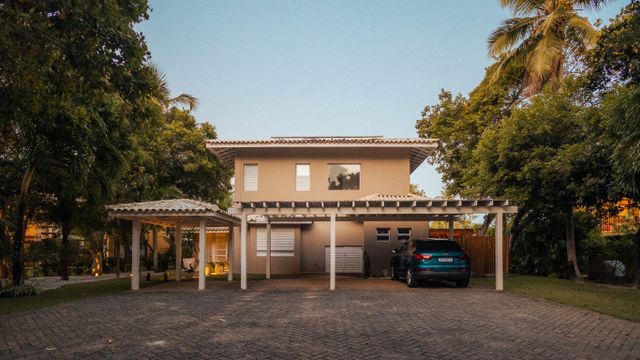
Don’t get fooled by the ‘easy to install’, ‘straightforward product’ marketing talk, getting the right carport can be a lot more involved than that. In Brisbane, you’ve got approval requirements, setback calculations and material decisions to get right, and it’s easy to get caught out. Many homeowners find out the hard way, either when their application stalls out or when they’re trying to sell the place and the unapproved structure is a disclosed defect waiting to happen.
Approval Isn’t Optional, and Neither Is the Paperwork
It’s a common misconception that you only need to worry about council approval for a small freestanding carport, or one that’s attached to the house. But in Brisbane and Moreton Bay, the rules are a bit different. No matter how big or small your carport is, you need to get a private building certifier on board before you can carry out the work. This is something every legitimate Carports Brisbane installer will confirm before quoting. And if you think you can just wing it and avoid all that ‘red tape’, well you’d be surprised how low the exemption threshold is in Queensland.
Getting certified is all about ensuring your carport complies with the Queensland Development Code and the National Construction Code, that means checking to make sure you’ve got the right setbacks, site coverage and structural design. If you’re building an attached carport, you’ll need to jump through an extra hoop as the council will be looking at the structural connection to the house and the load transfer and waterproofing implications.
Looking at some of the numbers from the Queensland Government Statistician’s Office, you can see why certifier workloads are pretty high right now; there are plenty of people out there looking to build and extend their homes. And while it might seem like a hassle, getting certified before you start building is the simplest and cheapest option.
Working Out The Setbacks and Boundaries
If you do end up building a carport and you get the setbacks wrong, you’re going to be facing a right old headache. And in Brisbane, that’s the most common thing that gets carport applications rejected. See, the measurement from the boundary to the nearest structural element is what really matters, not the roof overhang. And on top of that, if you’re in one of those Moreton Bay suburbs where you’ve got a corner allotment, things can get even trickier, you’ve got dual frontage setback requirements, which basically means you can build in a smaller area.
So, to avoid all the heartache and expense of a redesign, get a licensed surveyor to check the boundary positions before you even think about finalising your design. It’ll only cost you a fraction of what you’d pay to redo the whole thing after you’ve poured the footings.
Materials that are Appropriate for the Queensland Climate
Colorbond steel is the material used for building carports in Brisbane due to proven performance of the material in terms of its weight, price and durability under conditions of Queensland rainfall and heating cycles. Pitch of the roof is a functional rather than aesthetical choice in this climate since too little pitch in case of a wide span does not allow enough drainage in case of torrential rains in Brisbane; the minimum pitch for wider spans is greater than stated in standard catalogue designs.
Poly carbonate sheeting is chosen for light transmission. There is quite a difference in the performance depending on the grade of the material; a UV stable diffused product will be durable and transparent much longer than a standard grade sheet in Queensland’s climate conditions. If only the type of the product is specified without indicating the grade, it would be difficult to control the quality of the work done.
The Problem of the Wall Junction
The flashing of the junction between the carport roof and the wall of an existing building is what causes problems with water ingress in the long run. It is rarely explained in catalogue structure drawings and often improperly done. Connection of power and lights from the house to the carport should be done by a qualified electrician with a Form 15 electrical certificate; it is a separate charge which is sometimes forgotten in the initial estimates.